Five blind types, eleven collections
Venetian in aluminium, real wood and faux wood. Vertical in PVC, fabric and sheer. Roller, pleated and day and night shades. Each one is built from catalog data, not from a fixed model.
Concept project
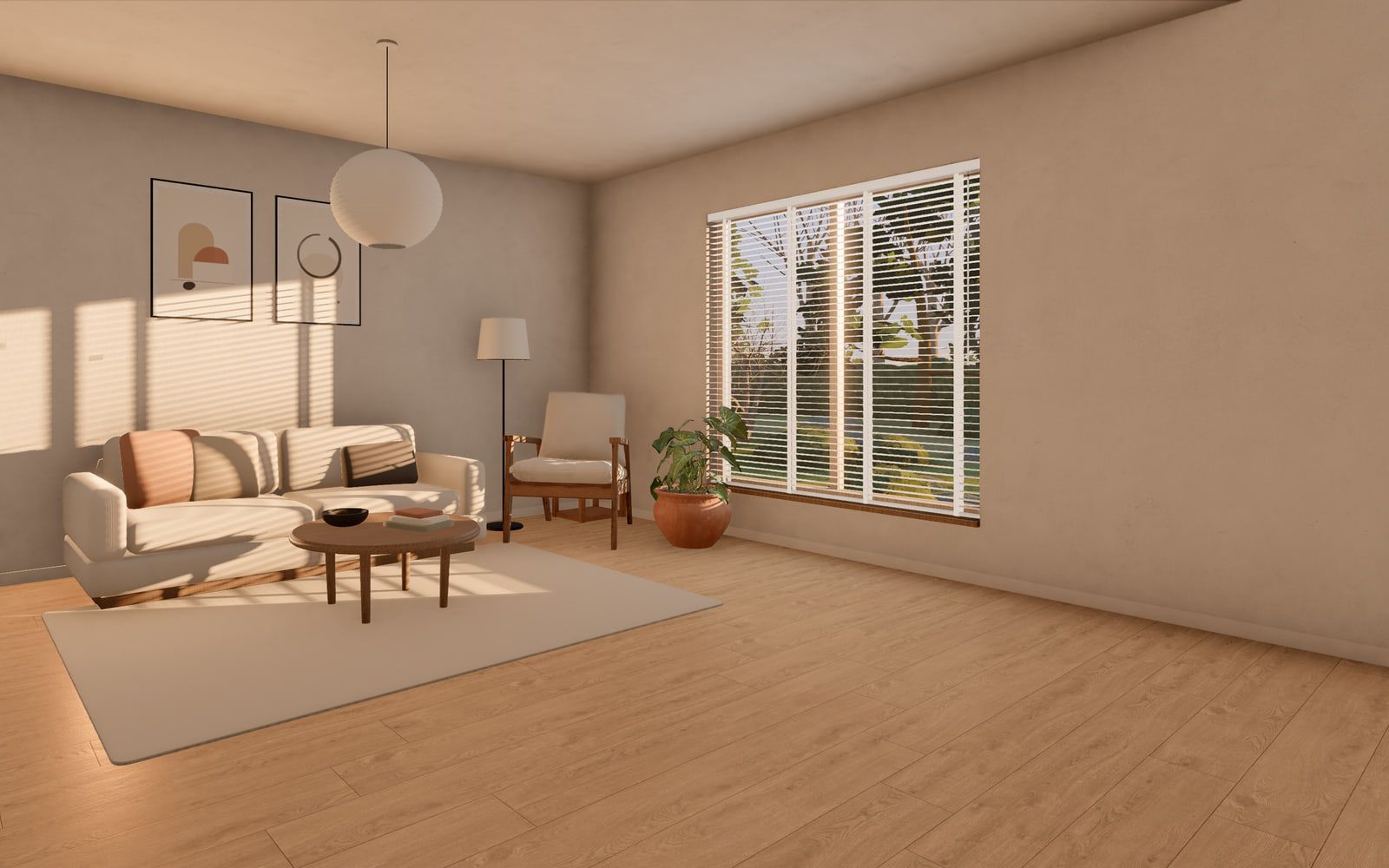
A real-time configurator for a premium range of blinds. A living room rendered live in the browser, where every blind, hour, season and view changes the light, with a live price.
Live in your browser, not a video. Opens in a new tab and sets its quality to your device.
The Louver brand, its collections and its prices are made up; we created them to show the work. Nothing is sold, and “Request a quote” sends nothing.
The challenge
People buy a blind for the light it lets in. They want to know how a sheer softens the morning, how slats stripe the floor in the afternoon, and whether the room is private at night.
Product photos show one finish, at one hour, in one room. A premium range has hundreds of combinations. Louver answers those questions in the shopper’s browser.
The approach
We started with the light, not the controls. The sun’s path comes from the hour, the season and the way the window faces, and it moves across the floor as the shopper drags the time.
Every blind is built in 3D from catalog data: slats, vanes, pleats and fabric. Each material has its own way with light, so a sheer glows with the sun behind it and a blackout fabric darkens the room.
The catalog is data, kept apart from the scene. A new brand’s products, materials, colours and prices are a data change, which is what makes the configurator white-label.
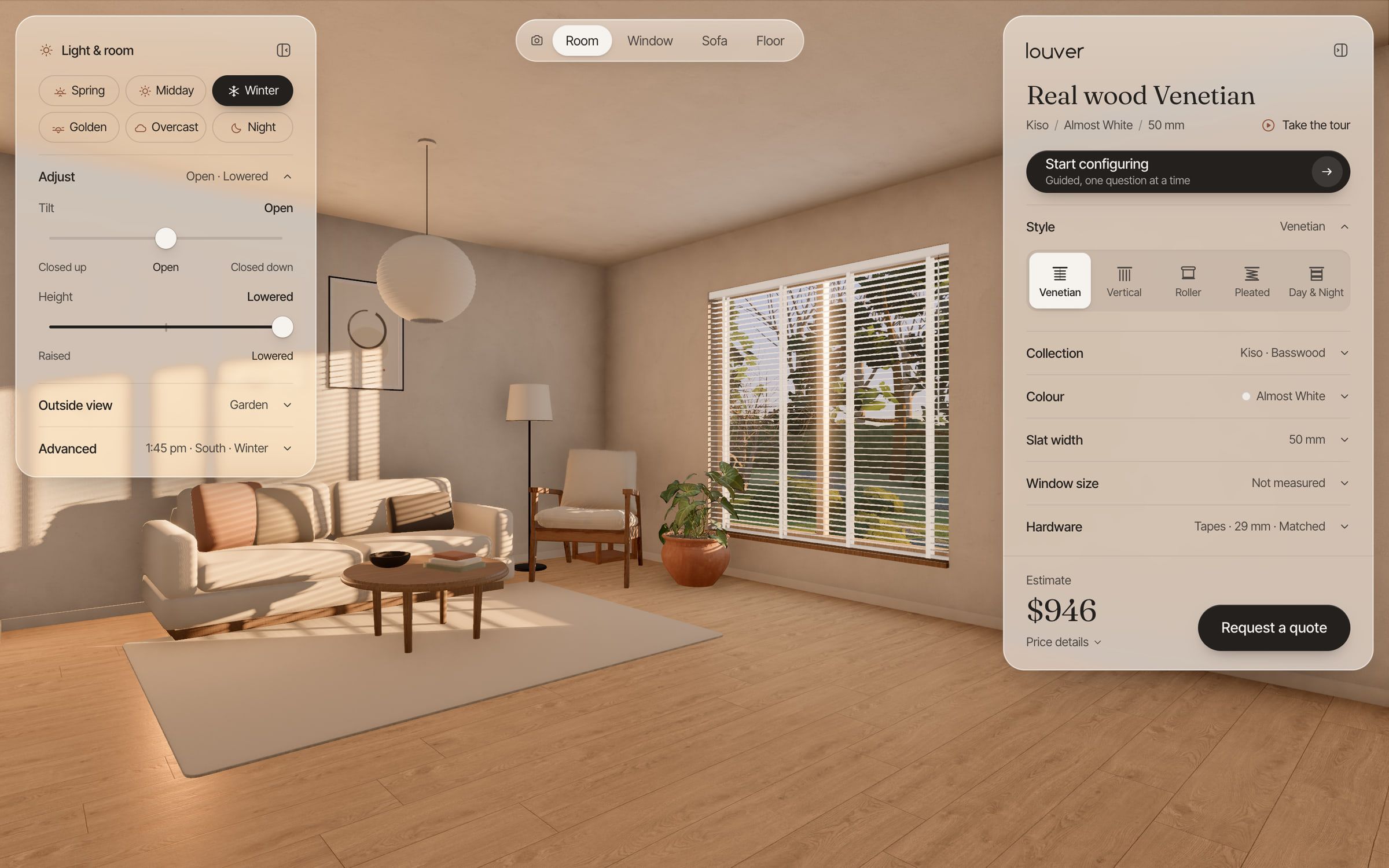
The controls stay quiet so the room can lead: two panels on a laptop, one sheet on a phone, and four camera views chosen for what they show. The room, the window, the sofa and the floor.
Venetian in aluminium, real wood and faux wood. Vertical in PVC, fabric and sheer. Roller, pleated and day and night shades. Each one is built from catalog data, not from a fixed model.
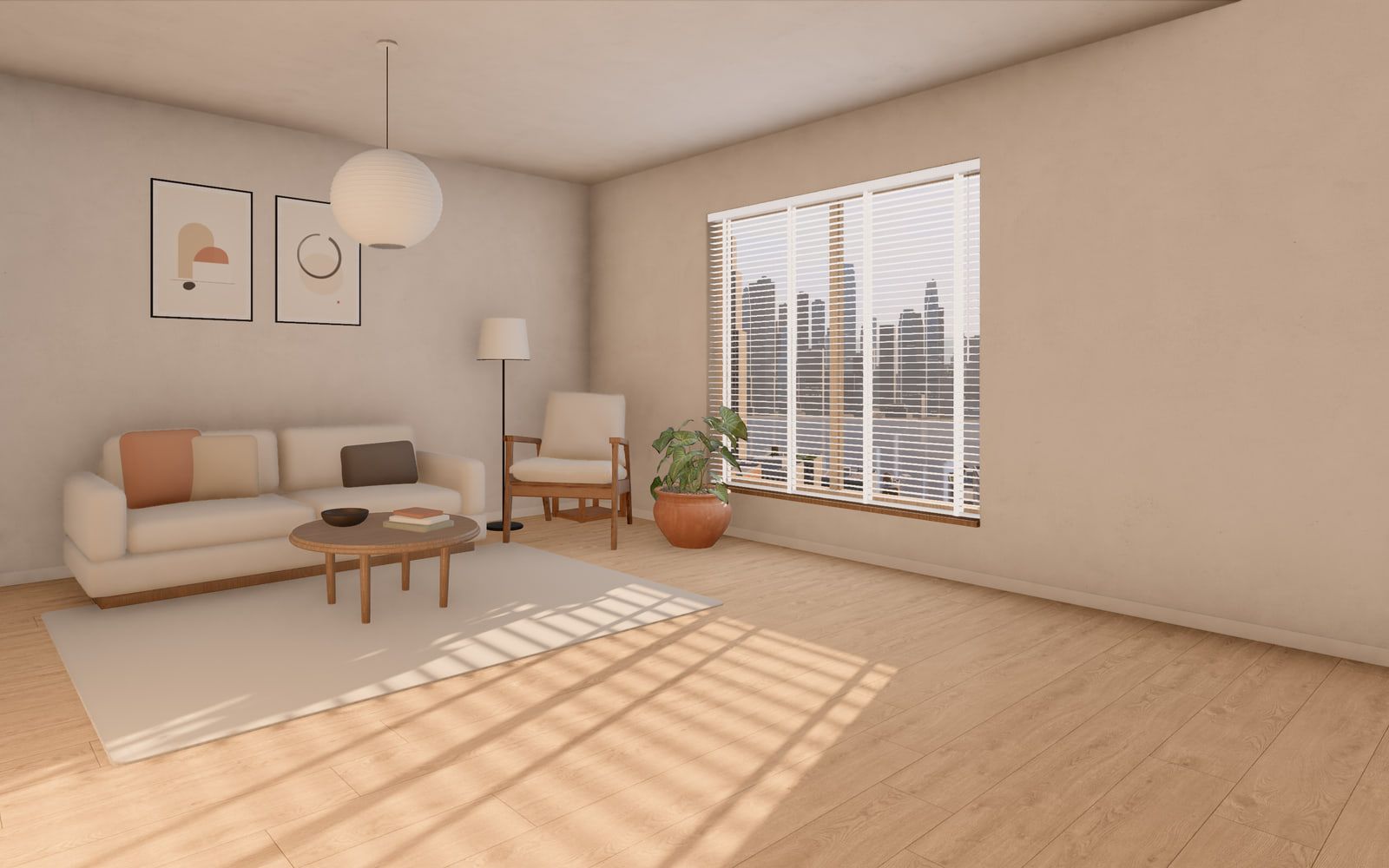
Drag the time from sunrise to night. Choose the season, the window’s direction and a clear or grey sky. Slats cast sharp stripes near the window and softer ones further into the room.
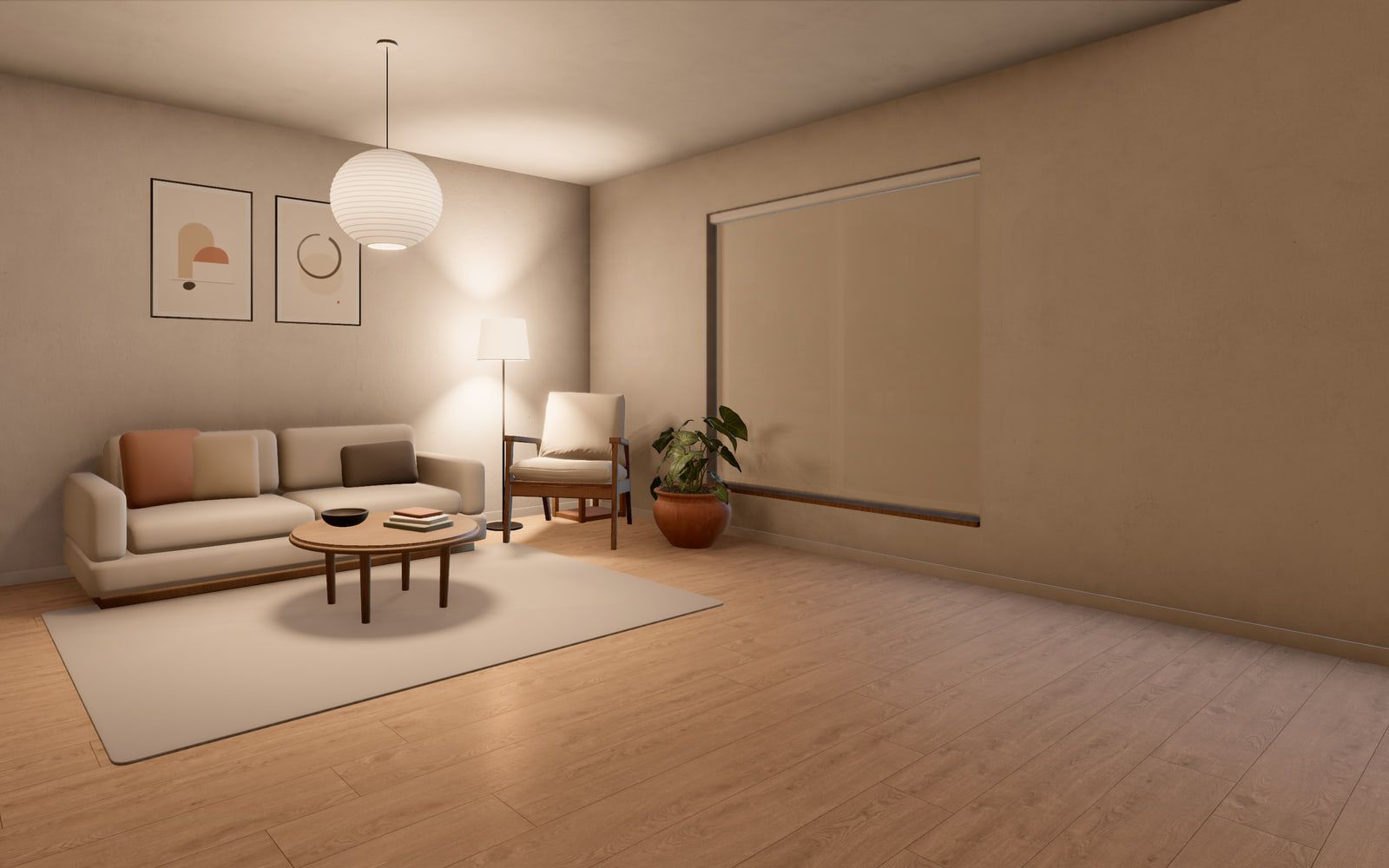
Switch on the pendant and the floor lamp. After dark they lead the room, and closing the blind shows how private it becomes.
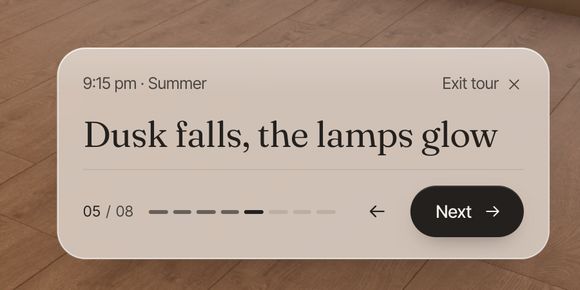
Eight short chapters tell the story: a winter sun that reaches further, grey days, long summer evenings, privacy after dark. Each chapter sets the camera, the light and the blind. When the tour ends, the room goes back to how you left it.
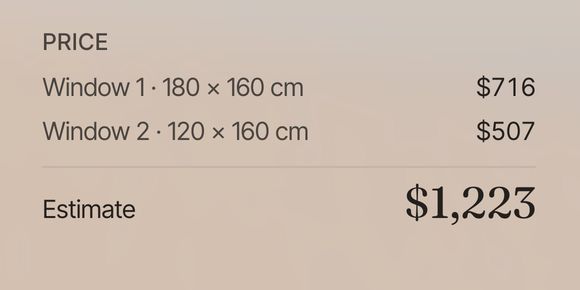
The price moves with every choice: type, material, colour, options and size. Enter each window in centimetres or inches, and the estimate covers up to three. The pricing model is ready for a brand’s own width-by-height price grids.
A garden, a city across a river or a skyline from the 35th floor, all built in 3D. Each one tints the light that reaches the room, and at dusk the city’s windows light up one by one.
“Start configuring” asks one question at a time, with the camera and the light set to show the answer. The summary groups every choice with its price.
Louver picks a quality level for each device and steps down if it starts to struggle. On a phone the two panels become one sheet you drag up and down, a tablet gets its own layout, and every control is sized for a finger.
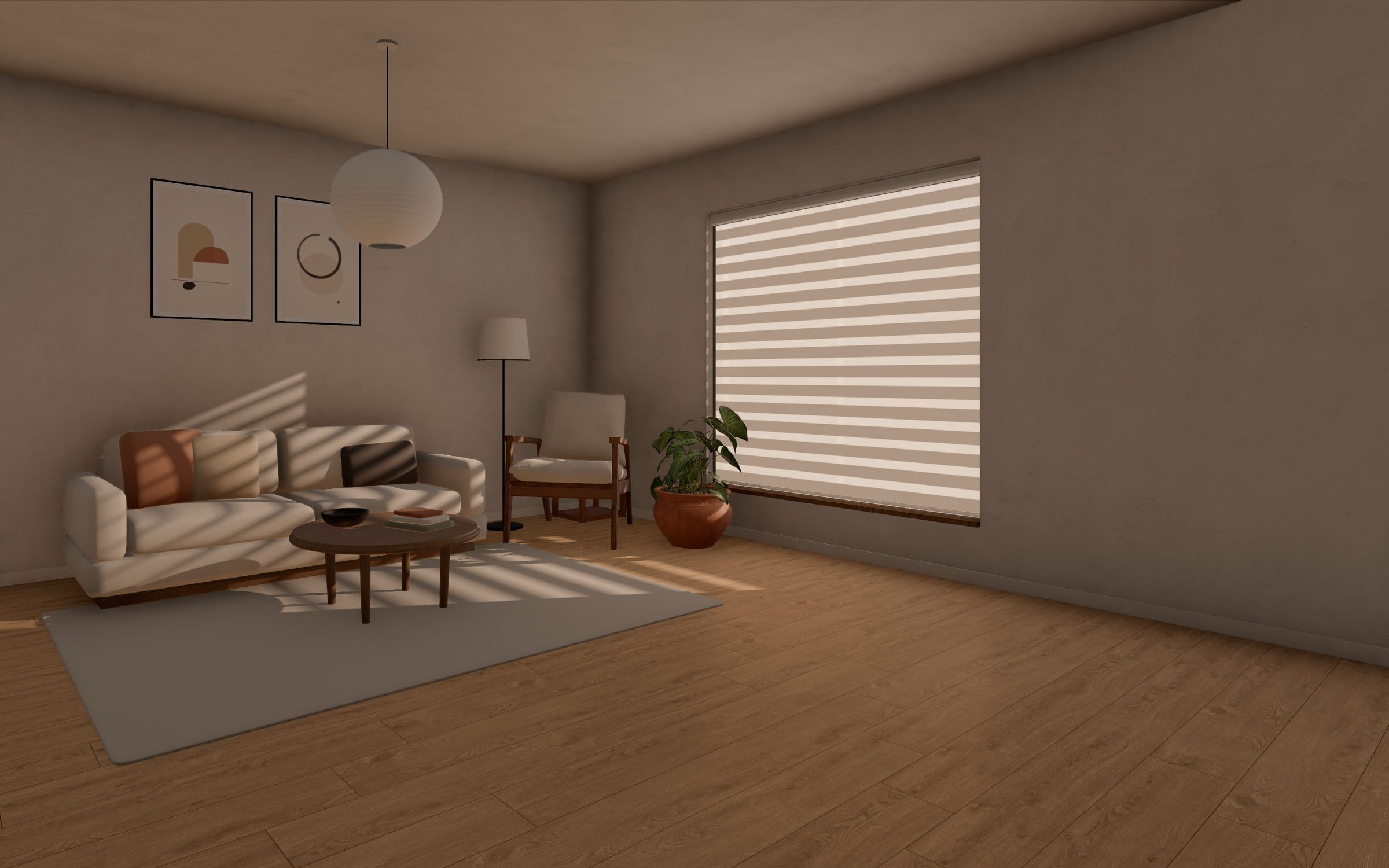
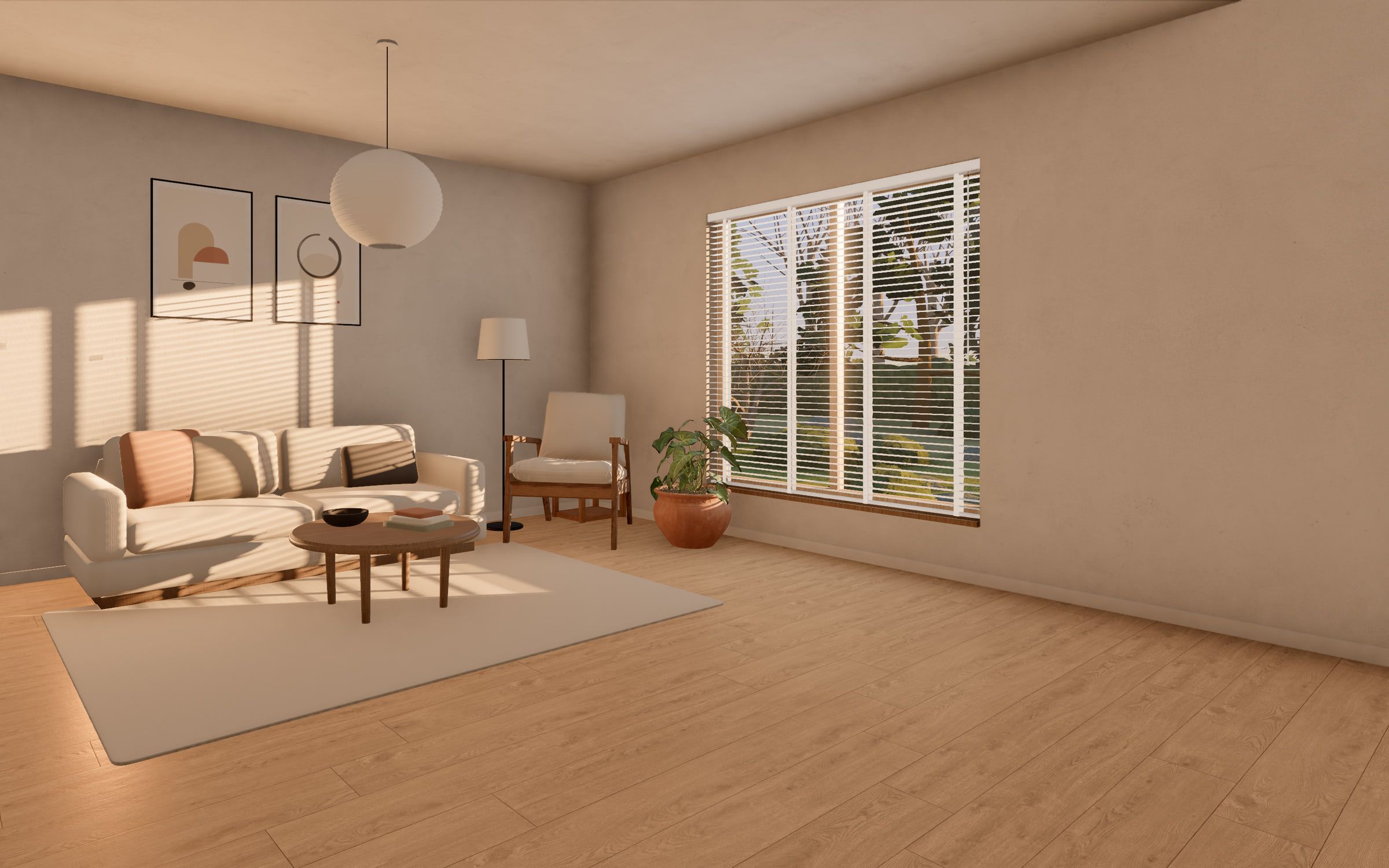
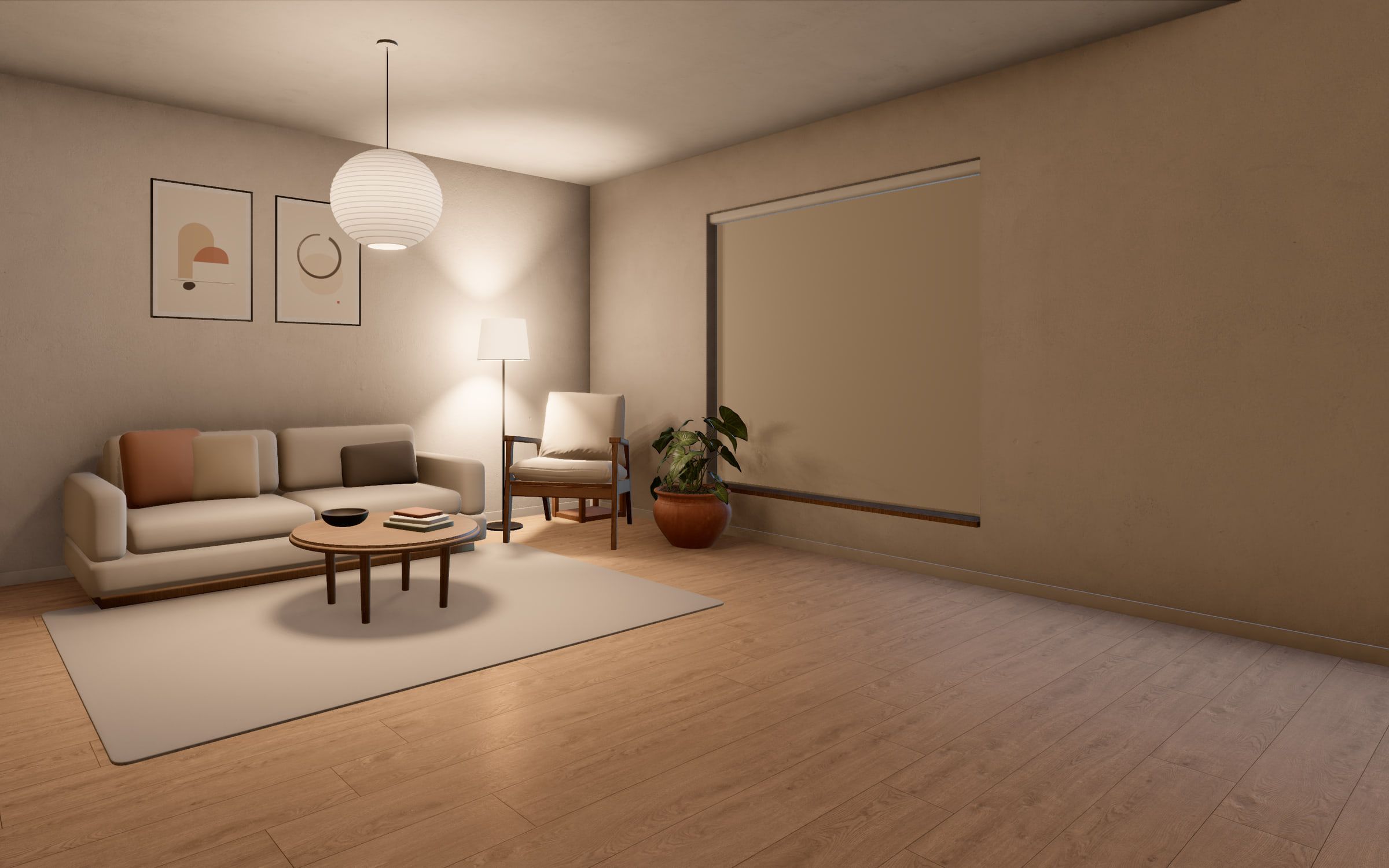
Louver is about blinds, but its parts are general: a model of daylight, materials that react to it, a catalog that is data, a live price and a summary built to hand over to a cart.
Swap the blinds for sofas, lamps or kitchen fronts: the daylight, the catalog and the live price carry over, and we model your products to match. Tell us what you make, and we will show you what it would take.
Live in your browser, not a video. Opens in a new tab and sets its quality to your device.
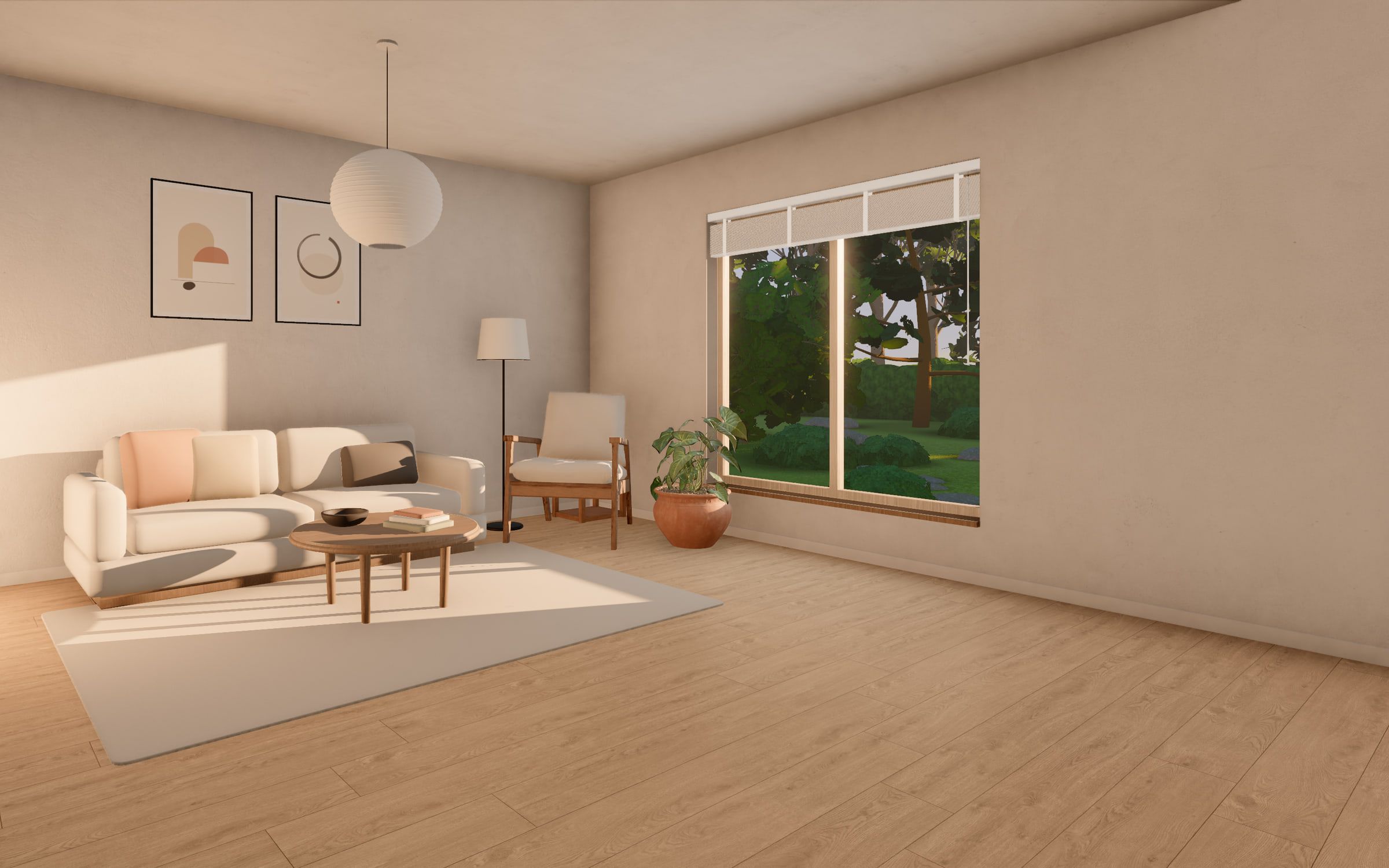
The 3D room downloads only when you press the button.
Tell us what you make and where you sell it. We’ll reply within a few working days.
Tell us about your product